
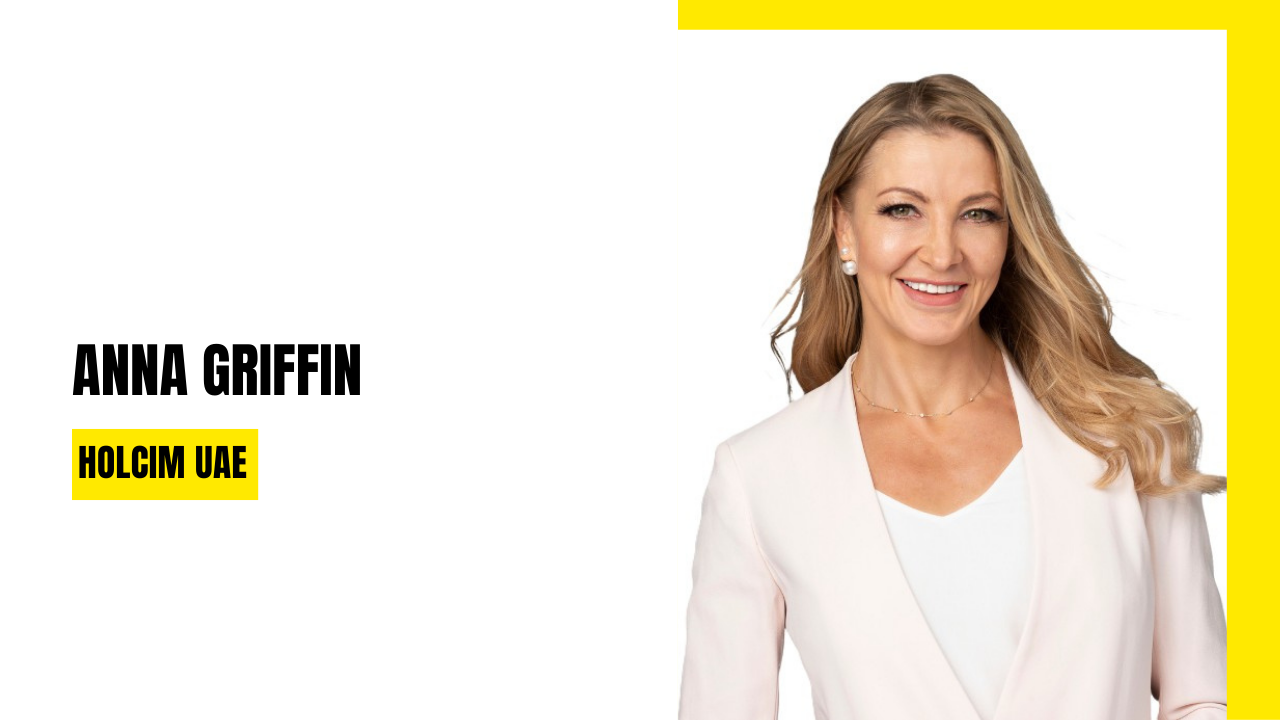
Anna Griffin, Head of Sustainability and Advocacy, Holcim UAE, shares how women can overcome barriers in male-dominated industries, build influence through credibility, and prepare for leadership in an era of AI, digital tools, and sustainability-driven decision-making. She emphasizes that real change comes from visibility, sponsorship, and embedding inclusion into everyday organizational culture.
What defining moments or challenges most shaped your professional journey?
My journey has been shaped by working on subjects that sit at the intersection of industry, policy, and long-term environmental responsibility. Contributing to complex, cross-sector discussions has reinforced the value of system thinking, collaboration, and evidence-based decision making. Those environments shape you to be measured, solutions-oriented, and outcome focused.
What barriers do women still face in leadership today that aren’t talked about enough?
One of the less visible barriers today is not capability, it is access. Leadership opportunities are often shaped through high-impact projects, strategic exposure, and informal sponsorship networks. Many talented women are delivering exceptional results but are not always positioned in the rooms where influence is built. Progress now requires intentional sponsorship and visibility, not just mentorship, ensuring women are not only ready for leadership, but seen as critical contributors and leaders. In male-dominated sectors like construction and heavy industry, the absence of visible female leaders can create a self-reinforcing cycle.
How have you built credibility and influence in environments where women are underrepresented?
Credibility is built through technical depth, consistency, and reliability. When your contributions are well-researched, balanced, and aligned with business and regulatory realities, trust follows. Influence develops steadily through delivery and professional integrity. Over time, a track record of sound judgment becomes more powerful than any single position or title.
How is technology—especially AI and automation—changing leadership expectations in your industry?
Technology is strengthening how decisions are informed and measured. Leaders are now expected to be more data-literate and comfortable working with digital tools that support forecasting, compliance tracking, and performance monitoring. It supports better decisions, while accountability and judgment remain human responsibilities. The expectation is not technical specialization, but informed oversight and responsible use.
What skills or mindsets will be most critical for the next generation of women leaders?
The next generation of women leaders will need a combination of analytical strength and adaptive thinking. The ability to interpret complex data, connect commercial and sustainability priorities, and communicate with clarity across diverse stakeholders will be critical. At the same time, leaders must be comfortable navigating rapid technological change, including the growing role of artificial intelligence in shaping decisions and operations. Resilience and composure in uncertainty will remain essential, along with digital fluency and a deep understanding of sustainability as a strategic core, not a peripheral agenda. Leadership in the coming decade will be defined by the ability to balance innovation with responsibility and growth with impact.
What role have mentorship and sponsorship played in your career, and how do you support others today?
Guidance and professional support networks are valuable at every stage of leadership. Constructive mentorship helps refine perspective, while sponsorship creates visibility. I believe in structured knowledge-sharing and creating professional platforms where emerging leaders can contribute and grow. Even small acts of advocacy can significantly accelerate someone’s professional trajectory.
How can organizations move beyond policies to create cultures where women genuinely thrive?
Culture strengthens when inclusion is reflected in everyday practice. Transparent pathways to leadership, fair access to opportunity, and objective performance measures make a meaningful difference. Consistency in implementation is what turns policy into progress. Regular review of outcomes, not just intentions, helps keep that progress measurable and sustained.
What advice would you give young women considering careers in IT, security, or leadership roles?
Build strong subject knowledge and stay curious about how systems work. Seek roles that offer real responsibility and learning depth. Professional credibility grows from competence, preparation, and steady performance. Long-term growth is usually built through disciplined skill development rather than quick visibility.
What does International Women’s Day mean to you, and what real change would you like to see beyond it?
It is a valuable moment to recognize contribution and encourage participation across sectors. Sustained progress comes from continued investment in capability building, leadership development, and equal access to opportunity. That is where lasting impact is created. Beyond the celebration, I would like to see progress measured by influence, not just representation, with more women shaping strategy, policy, and key decisions. Real change happens when inclusion is embedded in everyday leadership, opportunity, and accountability.
